
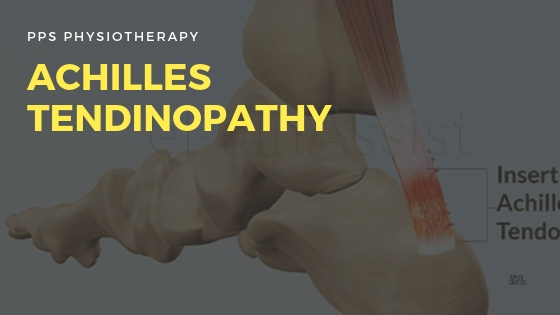
Achilles tendinopathy is a condition involving pain and reduced function of the Achilles tendon, often affecting walking, running, jumping or other activities that load the calf and tendon. Symptoms commonly develop gradually and may include morning stiffness, local tenderness and pain during or after activity.
Although sometimes called Achilles tendonitis, the term Achilles tendinopathy is generally preferred for persistent tendon pain and impaired function. Importantly, not all Achilles pain is tendinopathy, and a sudden injury with significant weakness or loss of push-off requires prompt assessment for a possible tendon tear.
Originally published: 11 September 2018
Last substantially updated: 12 July 2026
Written by: Grant Burton, Director and Principal Physiotherapist, PPS Physiotherapy
About the author: Grant Burton is the Director and Principal Physiotherapist at PPS Physiotherapy. He works in private practice managing musculoskeletal and sports presentations and leads physiotherapy services across the Kellyville and Carlingford clinics.
Key takeaways
- Achilles tendinopathy commonly causes localised tendon pain, morning stiffness and discomfort during activities such as walking, running or jumping.
- Midportion and insertional Achilles tendinopathy affect different parts of the tendon and may require different rehabilitation considerations.
- Progressive tendon-loading exercise is a first-line treatment for midportion Achilles tendinopathy.
- Eccentric heel drops are not the only form of effective tendon loading; rehabilitation should be matched to the individual’s presentation, capacity and goals.
- A sudden pop, severe acute pain or marked loss of push-off strength should be assessed promptly to exclude a significant Achilles tendon tear or rupture.
What is Achilles tendinopathy?
Achilles tendinopathy is characterised by pain and impaired function involving the Achilles tendon, which connects the calf muscles to the heel bone. The tendon plays an important role in walking, running, climbing stairs, rising onto your toes and jumping.
Symptoms may develop when the demands placed on the tendon exceed its current capacity to tolerate and recover from those loads. This can occur after a change in running volume, intensity, hills, speed work, sport, walking demands or other physical activity. However, there is not always one obvious cause or triggering event.
Age, previous Achilles symptoms, calf capacity, recovery and individual health factors may also be relevant.
What does Achilles tendinopathy feel like?
Typical symptoms include localised Achilles tendon pain, morning stiffness and discomfort during or after activities that load the tendon.
People may notice:
- pain or tenderness when touching the Achilles tendon;
- stiffness during the first steps in the morning or after prolonged sitting;
- pain during walking, running, jumping or rising onto the toes;
- symptoms that initially ease as the tendon warms up but return later or the following morning;
- reduced calf strength or endurance;
- thickening or swelling around the tendon in some cases.
The presentation varies between individuals. Some people can continue exercising with relatively mild discomfort, while others experience symptoms during ordinary walking or daily activities.
Midportion vs insertional Achilles tendinopathy
The location of Achilles pain matters because midportion and insertional Achilles tendinopathy affect different regions of the tendon and should not automatically be managed in exactly the same way.
| Feature | Midportion Achilles tendinopathy | Insertional Achilles tendinopathy |
|---|---|---|
| Typical location | Pain in the tendon above the heel attachment | Pain where the Achilles tendon attaches to the back of the heel bone |
| Common symptoms | Local pain, tenderness and sometimes tendon thickening | Pain and tenderness at the tendon insertion, sometimes aggravated by footwear or positions involving greater ankle dorsiflexion |
| Loading considerations | Progressive tendon loading is central to rehabilitation | Progressive loading remains important, but reducing excessive tendon compression may be relevant, particularly during earlier rehabilitation |
| Stretching and heel drops | May be considered according to individual findings | Deep dorsiflexion or dropping the heel below a step may aggravate some presentations and should not be prescribed automatically |
This distinction is one reason why a generic online exercise programme may not suit every person with Achilles pain.
What causes Achilles tendinopathy?
Achilles tendinopathy is often associated with a mismatch between the load placed on the tendon and its current capacity to tolerate and recover from that load. There is rarely one universal cause.
Relevant factors may include:
- a sudden increase in running distance, speed or frequency;
- adding hills, sprinting or jumping;
- returning to sport or exercise after a period of reduced activity;
- increased walking or occupational demands;
- reduced calf strength or endurance;
- previous Achilles symptoms or injury;
- age and certain individual health factors;
- changes in footwear or training surface where relevant to the individual.
It is important not to assume that every case is caused by poor biomechanics, tight calves or the wrong shoes. A useful assessment considers the person’s symptoms, activity history, physical capacity and relevant individual factors together.
How is Achilles tendinopathy assessed?
Achilles tendinopathy can often be identified from the clinical history, symptom location and physical examination; imaging is not automatically required in every straightforward presentation.
An assessment may consider:
- the exact location and behaviour of symptoms;
- whether the pain developed gradually or suddenly;
- morning stiffness and symptoms after rest;
- recent changes in walking, running, sport or training load;
- tenderness and possible tendon thickening;
- calf strength and endurance;
- single-leg heel-raise capacity;
- pain during relevant tendon-loading tasks;
- how the tendon responds during and in the 24 hours after activity.
Imaging such as ultrasound or MRI may be appropriate when the diagnosis is uncertain, symptoms are atypical, a significant tear is suspected or the result would meaningfully affect management. Imaging findings should be interpreted alongside the clinical presentation rather than in isolation.
Is Achilles tendinopathy the same as an Achilles tear?
No. Achilles tendinopathy typically develops more gradually, whereas an acute Achilles tear or rupture commonly occurs suddenly.
A person with an acute tear may describe a sudden pop, snap or sensation of being kicked or struck at the back of the ankle. There may be immediate difficulty walking or pushing off the foot.
Seek prompt medical assessment after a sudden Achilles injury, particularly if there is:
- a pop or snapping sensation;
- sudden severe pain;
- marked loss of push-off strength;
- difficulty walking after an acute injury;
- significant swelling or bruising.
A partial Achilles tear can sometimes be more difficult to distinguish from other Achilles conditions, so sudden onset or significant functional loss warrants appropriate assessment.
Should you completely rest an Achilles tendon?
For Achilles tendinopathy, complete rest is generally not the long-term solution because the tendon and calf ultimately need sufficient capacity to tolerate the demands of daily life, work, exercise or sport.
However, this does not mean simply pushing through worsening pain or continuing every activity unchanged. Rehabilitation commonly involves adjusting aggravating loads while maintaining appropriate activity where possible.
The appropriate amount of walking, running or sport depends on factors such as symptom severity, functional capacity, goals and how the tendon responds during and after activity.
What treatment helps Achilles tendinopathy?
Progressive tendon-loading exercise is a first-line treatment for midportion Achilles tendinopathy and is used to improve pain and function over time.
There is no single exercise programme that is best for every person. Depending on the presentation and stage of rehabilitation, loading may involve:
- isometric calf contractions;
- double-leg calf raises;
- single-leg calf raises;
- seated calf strengthening;
- progressively heavier resistance;
- faster or more explosive loading later in rehabilitation;
- hopping, jumping or running progressions when required for the person’s goals.
Eccentric heel drops can be useful in some rehabilitation programmes, but they are not the only evidence-based approach. The more important principle is appropriately dosed, progressive tendon loading matched to the person’s presentation and goals.
What about insertional Achilles tendinopathy?
Insertional Achilles tendinopathy requires additional consideration because the tendon can experience compression against the heel bone in positions of greater ankle dorsiflexion.
For some people, temporarily limiting deep dorsiflexion during calf strengthening, avoiding heel drops below the level of a step or modifying other compressive positions may help while loading is progressively rebuilt.
This does not mean avoiding ankle movement permanently. Rehabilitation should progress according to symptoms, capacity and functional goals.
How long does Achilles tendinopathy take to improve?
Recovery varies considerably, and Achilles tendinopathy often requires rehabilitation over weeks to months rather than a quick fix.
The timeframe can be influenced by:
- how long symptoms have been present;
- whether pain is midportion or insertional;
- current symptom severity and function;
- calf strength and endurance;
- work, sport and activity demands;
- consistency and progression of rehabilitation;
- individual health and recovery factors.
Persistent symptoms do not mean that recovery is impossible. Longer-standing Achilles tendinopathy can still improve with appropriate management, although rebuilding sufficient capacity for running or sport may take time.
What does PPS Physiotherapy assess for Achilles tendon pain?
At PPS Physiotherapy, an assessment of Achilles tendon pain may consider the exact location and behaviour of symptoms, whether the pain developed suddenly or gradually, recent changes in walking, running or training load, morning pain and stiffness, calf strength and endurance, functional tasks such as heel raises, and how the tendon responds during and in the 24 hours after activity.
Footwear and other individual factors may also be considered where relevant.
The aim is to understand not only where the tendon hurts, but also what it currently tolerates, what demands the person needs to return to and how rehabilitation can be progressed accordingly.
You can also learn more about our approach to foot and ankle conditions.
Need help with persistent Achilles tendon pain?
If Achilles pain or stiffness is affecting your walking, running, work or sport, a physiotherapy assessment can help clarify the likely contributing factors and establish an appropriate rehabilitation plan.
Frequently asked questions about Achilles tendinopathy
Can I walk with Achilles tendinopathy?
Many people with Achilles tendinopathy can continue some walking, but the appropriate amount depends on symptom severity, function and how the tendon responds during and after activity. A significant increase in pain or worsening symptoms that persist may indicate that the current load needs adjusting.
Is Achilles tendonitis the same as Achilles tendinopathy?
The terms are often used interchangeably, but Achilles tendinopathy is generally the preferred term for persistent tendon pain and impaired function. The condition is more complex than simply being an inflammatory problem.
Do I need an ultrasound for Achilles tendinopathy?
Not necessarily. Many straightforward cases can be identified from the clinical history and physical examination. Imaging may be useful when the diagnosis is uncertain, symptoms are atypical, a tear is suspected or the result would affect management.
Are eccentric heel drops the best Achilles exercise?
Eccentric exercises can be effective, but they are not the only appropriate form of tendon loading. Current clinical guidance supports tendon-loading exercise more broadly, with the programme adapted to the individual’s symptoms, capacity and goals.
Can chronic Achilles tendinopathy still improve?
Yes. Persistent symptoms can still improve with appropriate management and progressive rehabilitation, although recovery time varies and some people require a longer period to rebuild the capacity needed for demanding work, running or sport.
Achilles tendinopathy treatment at PPS Physiotherapy
PPS Physiotherapy provides physiotherapy assessment and rehabilitation for musculoskeletal and sports injuries at our Kellyville and Carlingford clinics.
For Achilles tendon pain, management may involve education, activity and load modification, progressive calf and tendon strengthening and a staged return to the activities that matter to you.
Ready to have your Achilles assessed?
If Achilles pain is limiting your walking, exercise or sport, we can assess your symptoms and help develop an individual rehabilitation plan based on your presentation and goals.
References and further reading
- Chimenti RL, et al. Achilles Pain, Stiffness, and Muscle Power Deficits: Midportion Achilles Tendinopathy Revision – 2024. Journal of Orthopaedic & Sports Physical Therapy.
- Healthdirect Australia. Achilles tendon injuries.
- Pringels L, et al. Effectiveness of reducing tendon compression in the rehabilitation of insertional Achilles tendinopathy: a randomised clinical trial. British Journal of Sports Medicine. 2025.
This article provides general health information and is not a substitute for individual medical advice, diagnosis or treatment. Seek appropriate professional assessment for sudden injury, severe symptoms or concerns about your health.
