

For some people exercise is a way of life, part of who they identify with as a person and not at all a chore. On the other hand, some people cannot stand the thought of getting hot and sweaty or engaging in any form of exercise.
Both ends of the spectrum come with their own unique benefits and shortfalls. If you meet in the middle this is where you find an optimal balance of work, leisure and exercise. With this balance you can have significant health benefits. These are not just physical but also psychological.
If we look at the people who LOVE exercise and do it on the daily if not multiple times a day they may be very fit but are more likely to be predisposed to overuse injuries, overtraining and potentially increased joint wear and tear overtime if they do not monitor their loads.
In the group who do not like exercise whatsoever you may have an increased risk of chronic diseases such as heart disease and diabetes and psychological conditions such as depression. With this in mind, we are not saying someone who is very physically active will not get heart disease it only reduces their probability according to research studies conducted between sedentary vs active individuals.
From a physiotherapy point of view, most people benefit from a mix of cardiovascular activity (activity that increases the heart rate for a prolonged period), resistance exercise (body weight or using weights to increase strength) and some flexibility/ ‘rehab’ work. You can encounter problems when the balance of these three are skewed all to one activity eg someone who runs 10km each morning and afternoon with no resistance work and no stretching/foam rolling etc.
Why do we recommend a combination?
Cardiovascular exercise has been shown to be effective in improving the heart and lungs, reducing the risk of cardiovascular disease, diabetes and some types of cancer. This type of exercise includes brisk walking, running, cycling, swimming etc over a prolonged period
Resistance exercise has the potential to increase muscle, tendon and bone strength. It is particularly important during the aging process to minimise the risk of stress fractures due to osteoporosis. This type of exercise includes body weight exercises or those using dumbbells or machine weights.
Flexibility/ ‘Rehab’ work is important for maintaining the right muscle length and recognising when something is sore and actively doing something about it early. For example, if you went to the gym each day and always did bench press chances are your shoulders would start to round forwards which may eventually cause shoulder pain BUT if you balance this task out with some opposing muscle group work and stretching you will decrease your chance of injury and muscle imbalance.
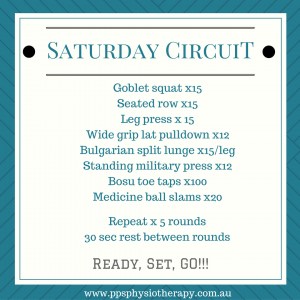
So if you are a person who regularly undertakes exercise this is the message for you:
- Try and mix up your program to include all 3 elements
- If you always focus on one muscle group per session try a full body circuit
- Balance your exercise with recovery
- Monitor your fatigue and recovery levels and take a break when you need to
- Know your body!
If you are currently not undertaking exercise you may want to start thinking about getting involved
- Start small and build up (eg 10min walk 3 times a week and slowly increase it) to 30misns per day
- Recruit a friend to help you on the journey
- Speak with someone in the fitness industry about where to start (the team at PPS Physiotherapy are always willing to help and offer advice)
- Focus on the positive side not on the aspects you don’t enjoy
- It takes 21 days to form a habit don’t give up on yourself
If you suffer from a condition which limits your ability to exercise there is usually still an option which you can undertake safely and obtain health benefits from. If you are unsure where to start speak to your GP or physiotherapist today who can assist you to find a suitable program tailored to your needs.
