
Tennis elbow is a common complaint seen in the clinic. However, despite its name only 5 out of 100 people actually develop tennis elbow from racquet sports. People suffering from tennis elbow are usually aged between 35-50 years however it can happen at all ages. Exercise is one of the best treatments for tennis elbow, if done correctly and consistently. The average episode of tennis elbow is between six months to two years.
What is it?
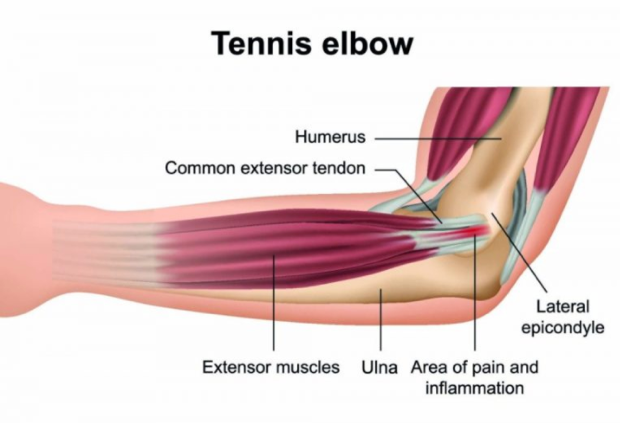
Tennis elbow is an injury involving the common extensor muscle in the forearm. It causes pain on the outside of the elbow. Tennis elbow is inflammation or in some cases micro tearing of the tendon or muscle that attaches to the outside of the elbow. These changes in the tendon are known as a tendinopathy.
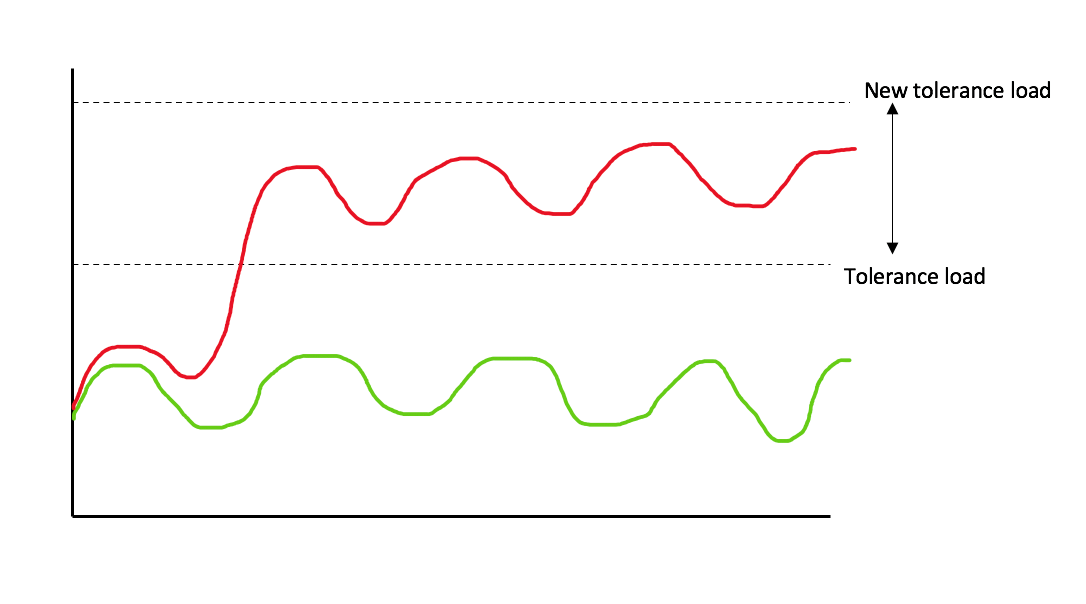
The picture above shows the changes that occur when you are experiencing tennis elbow. The bottom dotted line is our tolerance load for the tendon. Our tendons are happy to move up and down underneath this tolerance load (green line). When we stay below the tolerance load, we do not experience any pain or symptoms related to a tendinopathy. However, if we overuse a tendon and cause repetitive micro traumas to the muscle and tendon unit, the load placed on the tendon shoots up past our tolerance load (red line). Once we are functioning above what out tendon can tolerate you will begin to experience the symptoms of tennis elbow. The way to improve your symptoms is to increase your tolerance line to the top dotted line, this is can be achieved through physiotherapy treatment.
Causes:
As it is an overuse injury tennis elbow is caused by repetitive tasks or movements. This repetitive strain can come from:
- Weight-lifting
- Cooking
- Racquet sports (tennis, badminton, squash)
- Throwing sports (javelin, discus, bowling)
- Activities that involve fine motor e.g. typing, painting, sewing
- Using hand tools e.g. gardening tools, scissors, screwdrivers
Signs and symptoms:
- Pain in the elbow region
- Painful to touch outside of elbow or may hurt knocking it on objects
- Pain when gripping objects such as racquets, jars, opening doors
- Pain when shaking hands
- May feel weak when gripping objects such as a coffee cup
Treatment options:
- Physiotherapy:
Physiotherapy treatment for tennis elbow can involve a variety of different things. The main treatment options that could be provided consist of exercises, dry needling and soft tissue massage. As mentioned above exercise is one of the best treatment options that can be provided to a patient suffering tennis elbow. Exercise is the most effective way to increase our tolerance to load. Just like if you go to the gym and lift weights you get stronger as your muscles and tendons adapt to the loads placed on them. At your first consultation with your physiotherapist, they will determine an appropriate loading program for you to perform.
Dry needling is another treatment option that can be provided. Dry needling is where a very fine needle or an acupuncture needle is inserted into the skin and muscle. Your physiotherapist will find a trigger point in your muscle and push the needle in and out of this a couple of times. Sometimes you may experience a twitch in the muscle in response to this, the twitch eases the neural drive to the muscle which is the main culprit of the muscle feeling really tight and sore. Dry needling works to increase blood flow to the area which aids in healing and it has also been shown to assist in muscle regeneration.
Soft tissue massage can be helpful for reducing pain in the short term. It can provide an analgesic effect to the area. If only soft tissue massage was performed your tennis elbow would not improve, it is a tool we use to help manage pain for you to complete your prescribed exercises more comfortably. This in conjunction with exercises is an effective way to treat tennis elbow.
- Corticosteroid injection
A corticosteroid injection is a powerful anti-inflammatory medication that can offer fast relief for inflamed muscles, tendons and bursa’s. The main purpose is inflammation reduction, this can ease some pain felt if the pain is coming from inflammation. Studies show that corticosteroid injections can have short term benefit in terms of pain relief but at follow up appointments it actually had a negative overall effective, specifically on grip strength.1 In another study the corticosteroid injection group had the highest recurrence with 72% of people deteriorating at three or six weeks.2
- Heat vs. ice
The general consensus is that ice is helpful in relieving pain and symptoms of inflammation in the short term however, this may not be the case. Ice can cause a numbing sensation from cooling the skins temperature but applying topical ice has little effect on the muscle or tendon temperature which is the root cause of pain in tennis elbow patients. It has recently been shown that ice can interfere with the body’s natural healing process and can prevent the body releasing hormones that aid in healing by killing off damaged tissue.3 All this recent research points to opt out on ice use for inflammation.
The application of heat causes vasodilation, where your blood vessels increase in size. This promotes blood flow to the area. Through increasing blood flow to the area you are promoting healing as the oxygen and nutrients carried by the blood are vital in successful healing of tissues. Heat can also help with muscle relaxation and may provide some pain relief.
If you think you have a tennis elbow or are experiencing elbow pain book an appointment today to see one of our friendly physiotherapists.
- Brooke Sullivan – Physiotherapist (Bachelor of Sport and Exercise Management, Masters of Physiotherapy)
References:
- Olaussen, H. (2013). Treating lateral epicondylitis with corticosteroid injections or non-electrotherapeutical physiotherapy: a systematic review. BMJ Open, 3(10), e003564–e003564. https://doi.org/10.1136/bmjopen-2013-003564
- Bisset, B. (2006). Mobilisation with movement and exercise, corticosteroid injection, or wait and see for tennis elbow: randomised trial. BMJ, 333(7575), 939–941. https://doi.org/10.1136/bmj.38961.584653.AE
- Wood, Z. (2020). To ice or not to ice and injury?. Physio Network. https://www.physio-network.com/blog/ice-for-acute-injury/
