
What Is Hydrotherapy? Benefits, Exercises & Physio Guide
Hydrotherapy, also known as aquatic physiotherapy, involves performing therapeutic exercise in a heated pool environment. It may help some people with pain, stiffness, weakness, arthritis, post-operative rehabilitation needs, or difficulty tolerating land-based exercise.
Last updated: May 2026
Author: Grant Burton, Principal Physiotherapist at PPS Physiotherapy. Grant and the PPS Physiotherapy team regularly help patients across Kellyville, Carlingford and North-West Sydney with musculoskeletal pain, rehabilitation planning, exercise progression and return to normal activity.
Key Takeaways
- Aquatic physiotherapy uses the warmth, buoyancy and resistance of water to support exercise and movement.
- It may be useful for arthritis, chronic pain, post-operative rehabilitation, balance issues and general deconditioning.
- The reduced weight-bearing environment can make exercise feel more comfortable for some people.
- Pool-based rehabilitation is usually provided in specialised heated pools, hospitals or aquatic physiotherapy facilities.
- PPS Physiotherapy does not currently provide onsite pool-based therapy, but we can assess whether it may be suitable as part of your rehabilitation plan.
Understanding Aquatic Physiotherapy
Aquatic physiotherapy is the use of water-based exercise as part of a rehabilitation or health management program. It usually involves completing therapeutic exercises in a heated pool under appropriate supervision.
The use of water for therapeutic purposes has existed for thousands of years across ancient cultures, including India, China, Greece and Egypt. Today, pool-based exercise is often used in rehabilitation settings to help people move, strengthen and exercise in a lower-impact environment.
This type of rehabilitation may be considered for a variety of conditions, including:
- Osteoarthritis
- Fibromyalgia
- Persistent musculoskeletal pain
- Inflammatory conditions
- Muscle strains
- Fracture rehabilitation
- Post-operative rehabilitation
- Reduced mobility or balance confidence
- General weakness or deconditioning
How Does It Work?
Water-based rehabilitation works through the mechanical and thermal effects of water. Warm water, buoyancy and water resistance can all influence how the body moves and responds during exercise.
Warmth
Warm water may help reduce muscle tension, improve comfort and make movement feel easier for some people. This can be particularly helpful when pain or stiffness limits normal land-based exercise.
Buoyancy
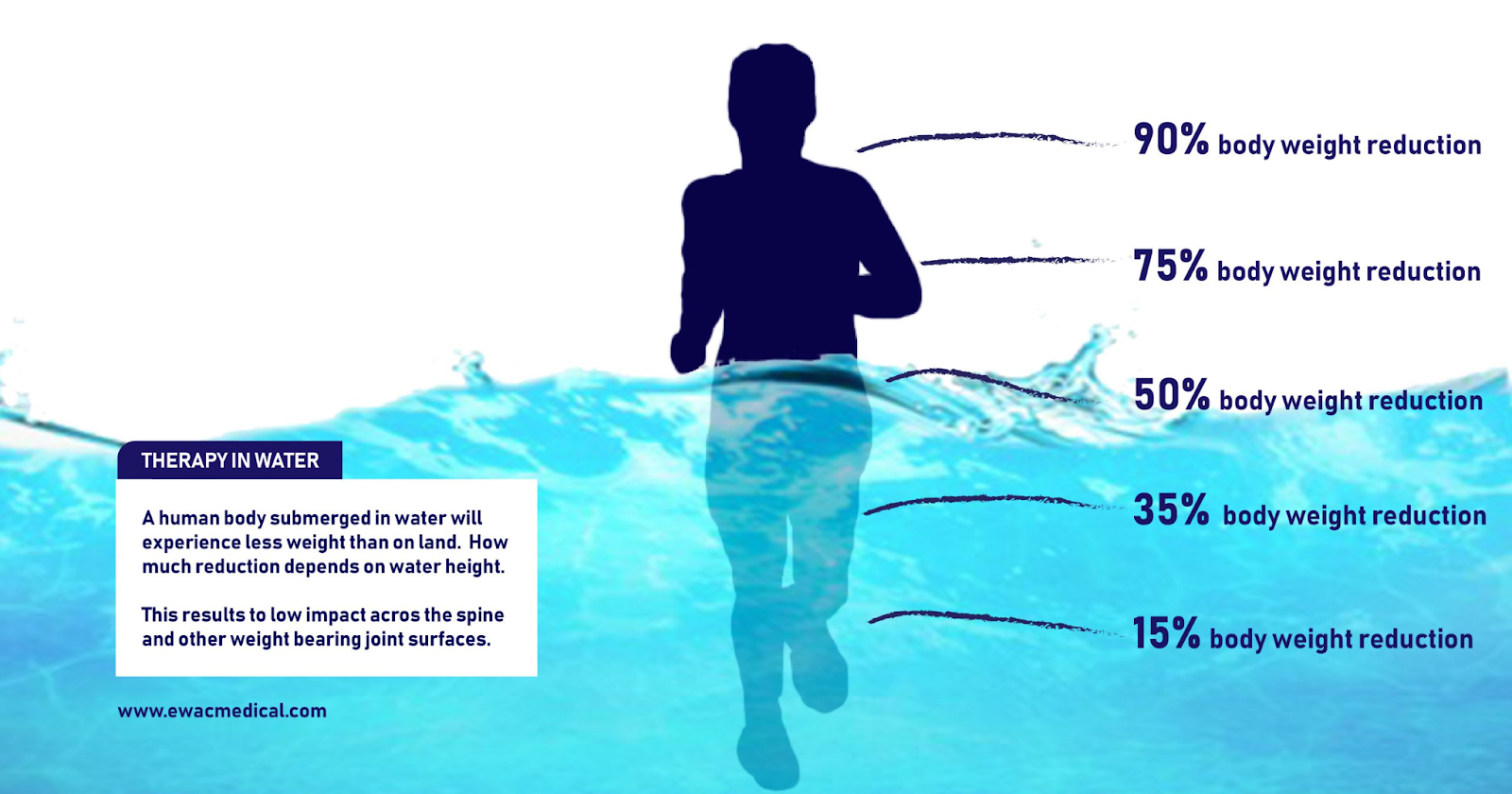
Buoyancy helps support body weight. This can reduce the load placed through joints and may allow people to exercise with less discomfort compared with land-based movement.
Resistance
Water is denser than air, so moving the arms or legs through water naturally creates resistance. This can be used to improve muscle strength, control and conditioning.
Hydrostatic Pressure
When the body is submerged, the pressure of the water can create a gentle compressive effect. Some people describe this as a supportive or massage-like feeling.
What Are the Potential Benefits?
Pool-based rehabilitation may help some people exercise more comfortably, especially when pain, stiffness or joint loading makes land-based exercise difficult.
| Potential Benefit | How It May Help |
|---|---|
| Pain relief | Warm water may help reduce pain sensitivity and muscle tension in some people with chronic musculoskeletal conditions. |
| Reduced joint load | Buoyancy supports body weight, which may reduce stress through painful joints. |
| Strengthening | Water provides resistance, allowing exercises to be progressed gradually. |
| Balance confidence | The pool environment can allow balance exercises to be practised with greater support and confidence. |
| Cardiovascular fitness | Moving against water resistance can increase exercise tolerance and general conditioning. |
| Relaxation | Warm water may help promote relaxation and reduce perceived muscle guarding. |
Who May Benefit?
Aquatic exercise may be helpful for people who need to exercise but find normal land-based rehabilitation too painful, difficult or intimidating.
It may be considered for people with:
- Knee, hip or spinal osteoarthritis
- Persistent back, hip or knee pain
- Post-operative rehabilitation needs
- Reduced walking tolerance
- Balance concerns
- Reduced confidence with movement
- General weakness following injury, illness or surgery
- Pregnancy-related aches and pains, where medically appropriate
For general information about arthritis, Arthritis Australia provides helpful patient education resources here.
However, water-based exercise is not automatically the best option for everyone. In many cases, land-based strengthening and functional rehabilitation remain essential for long-term recovery.
Is Pool-Based Exercise Better Than Land-Based Exercise?
Pool-based exercise is not necessarily better than land-based exercise; it is simply a different rehabilitation environment. The best option depends on the person’s condition, pain levels, goals, health status and ability to tolerate exercise.
| Pool-Based Rehab May Be Useful When | Land-Based Rehab May Be Better When |
|---|---|
| Pain limits normal exercise | The goal is return to sport, work or gym activity |
| Weight-bearing is difficult | Strength needs to transfer to stairs, walking, lifting or running |
| Balance confidence is reduced | Specific gym-based strengthening is required |
| Early movement tolerance is the priority | Later-stage functional rehabilitation is needed |
For broader information on the benefits of regular physical activity, the Better Health Channel has a helpful overview here.
Where Is Aquatic Physiotherapy Usually Provided?
Aquatic physiotherapy is commonly provided in specialised heated pools within hospitals, rehabilitation centres and selected aquatic physiotherapy facilities.
Some public and private hospitals offer pool-based rehabilitation as part of inpatient or outpatient programs. Depending on your condition, it may also be recommended alongside a broader physiotherapy rehabilitation plan.
Physiotherapists are primary contact practitioners, meaning a doctor’s referral is generally not required unless a third party such as WorkCover, DVA or NDIS is funding treatment. The Australian Physiotherapy Association has further information about physiotherapists as first contact practitioners here.
For some chronic conditions, your GP may refer you under a Chronic Disease Management Plan, which may provide Medicare rebates for physiotherapy services. Services Australia provides further information about allied health referrals under GP chronic condition management plans here.
What Happens During a Session?
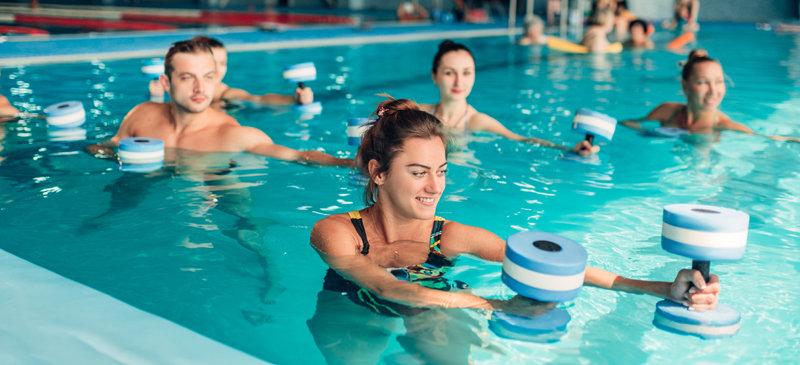
Aquatic rehabilitation sessions generally involve guided exercises performed in a heated pool under physiotherapy supervision.
Programs are typically tailored to the individual based on their injury, condition, fitness level, mobility and rehabilitation goals.
In this setting, the supervising physiotherapist may prescribe exercises designed to improve:
- Mobility and flexibility
- Muscle strength
- Balance and coordination
- Walking tolerance
- Confidence with movement
- General conditioning
Sessions may occur individually or in small groups and commonly last between 20 and 45 minutes depending on the person’s condition and tolerance levels.
The reduced weight-bearing environment of water can allow some people to move more comfortably compared with land-based exercise, particularly during earlier stages of rehabilitation or when pain levels are limiting normal exercise.
Pool-based therapy is often used as one component of a broader rehabilitation plan and is usually progressed toward more functional land-based strengthening and exercise over time.
When Should You Speak to a Physiotherapist?
You should speak to a physiotherapist if pain, stiffness, weakness or reduced mobility is stopping you from exercising normally.
A physiotherapist can assess your condition and help determine whether your rehabilitation should involve land-based exercise, aquatic exercise, gym-based strengthening, manual therapy, education, activity modification or a combination of approaches.
This is especially important if you are recovering from surgery, have a complex medical history, are returning to work or sport, or are unsure what level of exercise is safe.
You can learn more about our general physiotherapy approach at PPS Physiotherapy here: Physiotherapy services at PPS Physiotherapy.
Need Help Choosing the Right Rehab Approach?
At PPS Physiotherapy, we can assess your injury or condition and help you understand the most appropriate rehabilitation pathway.
This may involve land-based strengthening, mobility work, gym-based rehabilitation, education, activity modification, or referral toward external aquatic physiotherapy options if clinically appropriate.
Book an assessment at our Kellyville or Carlingford clinics to discuss the best next step for your recovery.
Does PPS Physiotherapy Provide Onsite Pool-Based Therapy?
PPS Physiotherapy does not currently provide onsite hydrotherapy services.
However, our physiotherapists can assess your condition and advise whether aquatic physiotherapy may be suitable as part of your broader rehabilitation plan. If it appears appropriate, we can discuss suitable options and help guide your overall management.
For many patients, land-based rehabilitation remains a very effective option. Our physiotherapists regularly help patients improve pain, strength, mobility, function and confidence through tailored exercise and evidence-based treatment plans.
Final Thoughts
Water-based rehabilitation can be a useful, low-impact option for some people, particularly when pain or reduced weight-bearing tolerance makes normal exercise difficult.
It is not a one-size-fits-all solution, and it is usually most effective when used as part of a broader rehabilitation plan that eventually progresses toward functional strength, mobility and confidence in daily life.
Wondering Whether Hydrotherapy May Help?
At PPS Physiotherapy, our physiotherapists can assess your condition and help determine whether hydrotherapy, land-based rehabilitation, or another treatment approach may be most appropriate for your situation.
While we do not currently provide onsite hydrotherapy services, we can discuss whether aquatic physiotherapy may be beneficial as part of your rehabilitation plan and help guide you toward suitable management options where appropriate.
To arrange an assessment at our Kellyville or Carlingford clinics, contact PPS Physiotherapy today.
Frequently Asked Questions
Do you provide hydrotherapy at PPS Physiotherapy?
No. PPS Physiotherapy does not currently provide onsite hydrotherapy services. However, we can assess your condition and advise whether aquatic physiotherapy may be suitable as part of your broader rehabilitation plan.
Is aquatic physiotherapy good for arthritis?
It may help some people with arthritis exercise more comfortably because the buoyancy of water can reduce joint loading. However, land-based strengthening is often still important for long-term function.
Do I need a referral?
A doctor’s referral is not usually required to see a physiotherapist privately. However, a referral may be needed if treatment is being funded by a third party such as WorkCover, DVA, NDIS or Medicare.
Is pool-based exercise better than normal physiotherapy?
Not necessarily. It may be useful in certain situations, but the best treatment depends on your condition, goals, pain levels and exercise tolerance.
Can aquatic exercise help after surgery?
It may be appropriate after some surgeries, but this depends on wound healing, surgeon instructions, medical safety and the stage of rehabilitation. Always seek individual advice before starting pool-based exercise after surgery.
