

Heel Pain When Walking? Causes, Fixes & Best Treatment (Kellyville Physio Guide 2026)
If you feel heel pain when walking, plantar fasciitis is one of the most common causes. It often feels like sharp pain under the heel, especially with your first steps in the morning or after sitting. The good news is that heel pain usually responds well to the right physiotherapy plan.
Last Updated: April 2026
Author: Grant Burton (Director & Principal Physiotherapist, PPS Physiotherapy)
Grant Burton is a physiotherapist with over 20 years of experience helping patients recover from musculoskeletal injuries, including persistent heel pain and plantar fasciitis. With a background in strength and conditioning and return-to-work rehabilitation, Grant focuses on evidence-based treatment that delivers real-world results for patients in Kellyville and across North-West Sydney.
Key Takeaways
- Heel pain when walking is commonly caused by plantar fasciitis.
- It often feels worse with the first few steps in the morning.
- Rest alone is usually not enough for long-term recovery.
- Progressive loading, footwear advice, and strengthening are often important.
- Seeing a physiotherapist early can help prevent heel pain from becoming chronic.
What Causes Heel Pain When Walking?
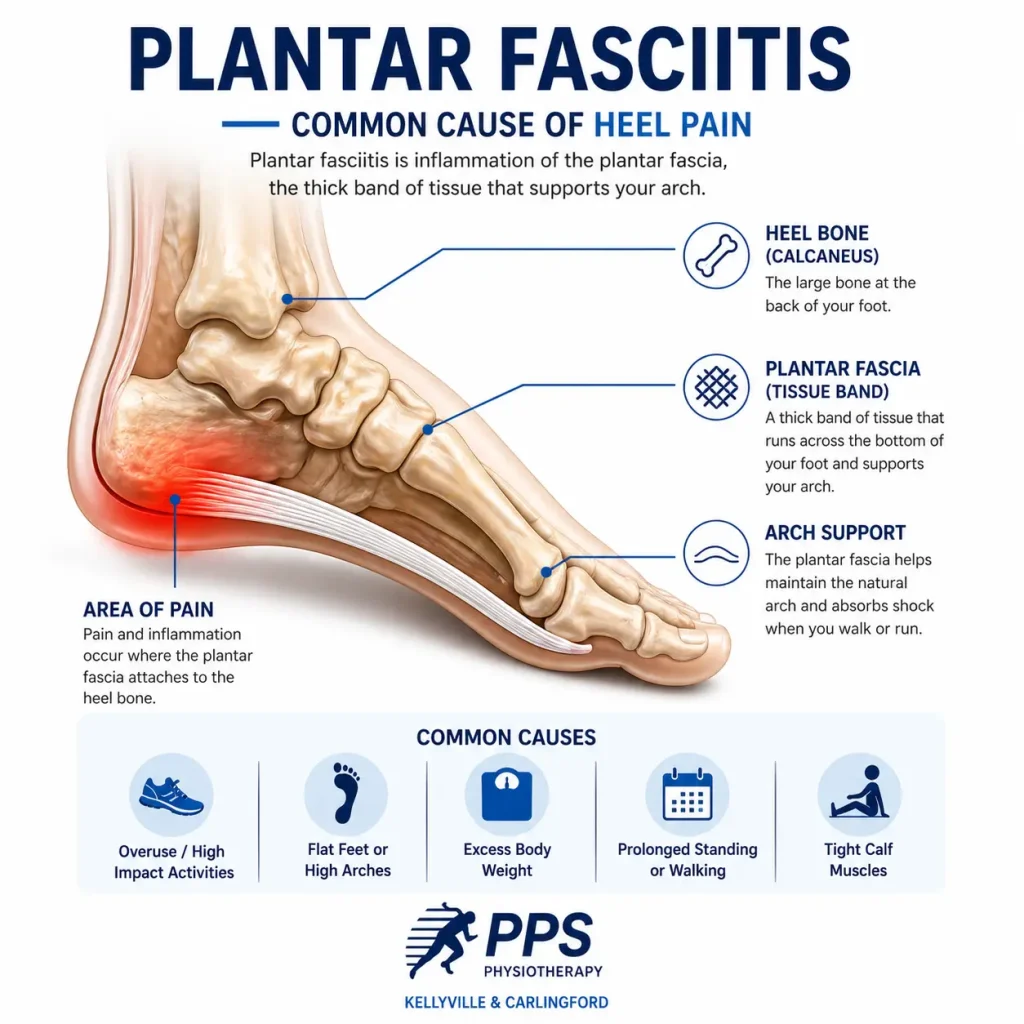
Heel pain when walking is commonly caused by overload of the plantar fascia. The plantar fascia is a thick band of tissue under the foot that helps support the arch. When this tissue is placed under too much stress, it can become painful and sensitive.
This can happen gradually over time or after a sudden change in activity. Many people notice symptoms after increasing their walking, running, standing time, or changing footwear.
Common contributing factors include:
- Sudden increases in walking or running load
- Tight calves or reduced ankle mobility
- Poor footwear or worn-out shoes
- Long periods of standing at work
- Flat feet, high arches, or altered foot mechanics
- Returning to exercise too quickly after time off
At PPS Physiotherapy Kellyville, we commonly see heel pain in runners, busy parents, tradies, healthcare workers, and people who spend long hours on their feet.
What Does Plantar Fasciitis Feel Like?
Plantar fasciitis typically causes sharp or stabbing pain under the heel. It is often worst with the first few steps in the morning, after sitting, or after getting out of the car.
The pain may ease once you warm up, but it often returns after prolonged walking, standing, or running.
Common symptoms include:
- Sharp heel pain first thing in the morning
- Pain after sitting or driving
- Tenderness under the heel or along the arch
- Stiffness through the foot and calf
- Pain that worsens after long walks or standing
Many patients describe “hobbling” for the first few minutes of the day before the foot gradually loosens up.
Is It Plantar Fasciitis or Something Else?
Plantar fasciitis is one of the most common causes of heel pain, but it is not the only possibility. Other conditions can feel similar, which is why an accurate assessment is important.
| Condition | Common Symptoms |
|---|---|
| Plantar Fasciitis | Pain under the heel, often worse with first steps in the morning |
| Heel Spur | May appear on imaging, but often not the true pain source |
| Fat Pad Syndrome | Deep central heel pain, often worse with prolonged standing |
| Achilles Tendinopathy | Pain at the back of the heel or Achilles tendon stiffness |
| Nerve Irritation | Burning, tingling, pins and needles, or radiating symptoms |
In our Kellyville clinic, we assess your pain location, walking pattern, footwear, calf strength, ankle mobility, and activity history to determine the most likely cause.
How Do You Fix Heel Pain Fast?
The fastest way to improve heel pain is to reduce excessive load while gradually rebuilding strength and tolerance. Rest may help settle symptoms temporarily, but long-term recovery usually requires a progressive treatment plan.
The goal is not just to reduce pain. The goal is to help your foot tolerate walking, standing, work, sport, and exercise again without symptoms returning.
Early Stage: Settle the Pain
- Reduce aggravating activity temporarily
- Avoid long periods of barefoot walking
- Use supportive footwear
- Consider short-term taping or arch support if appropriate
- Use ice after activity if it helps symptoms

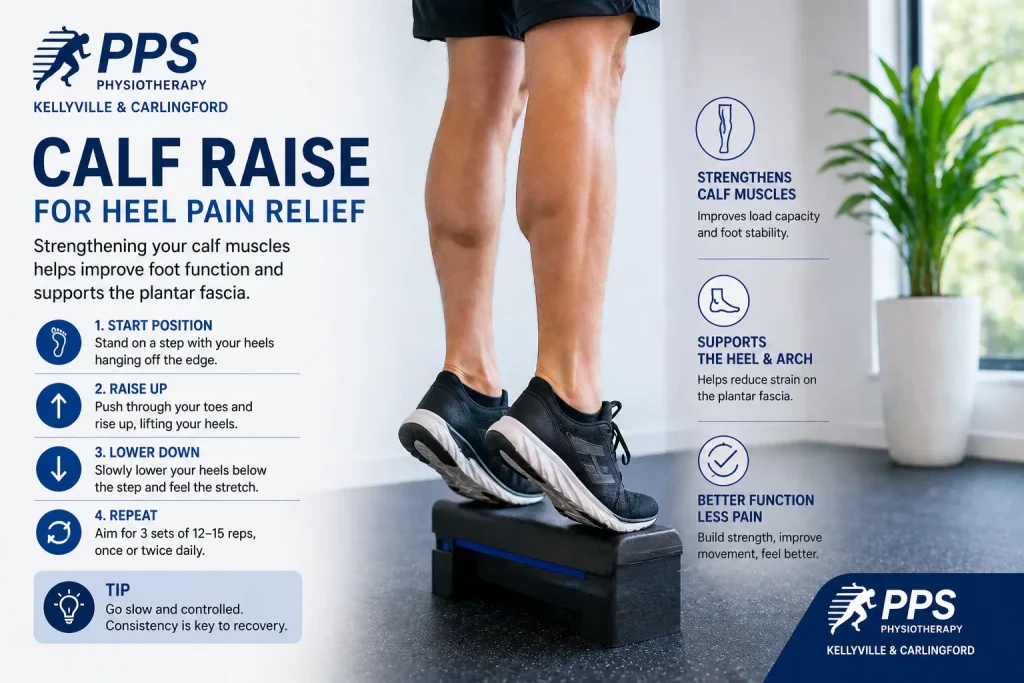
Rehab Stage: Fix the Root Cause
- Calf raises: 3 sets of 10–12 reps
- Plantar fascia stretch: 3 x 30 seconds
- Calf stretching: 3 x 30 seconds
- Foot intrinsic strengthening
- Progressive walking or running load management
Return to Activity Stage
- Gradually increase walking or running distance
- Monitor next-day pain response
- Progress calf and foot strengthening
- Review footwear and training habits
- Build tolerance before returning to full sport or long-distance running
At PPS Physiotherapy Kellyville, we tailor heel pain rehab based on your lifestyle, whether you are a runner, tradie, parent, office worker, or someone who simply wants to walk comfortably again.
Struggling with heel pain right now?
If you are in Kellyville and your heel pain is not improving, our physiotherapists can assess the exact cause and start the right treatment plan.
When Is Heel Pain Serious?
Heel pain may be more serious if it is constant, worsening, or not improving after several weeks. Most heel pain is not dangerous, but persistent or unusual symptoms should be assessed properly.
Signs you should not ignore:
- Severe heel pain at rest
- Night pain that wakes you
- Pain after trauma or a sudden injury
- Swelling, redness, or heat around the heel
- Numbness, tingling, or burning symptoms
- Pain not improving after 4–6 weeks
If you are unsure, a physiotherapy assessment can help identify whether your heel pain is likely plantar fasciitis or something else that needs further investigation.
When Should You See a Physio for Heel Pain?
You should see a physiotherapist if heel pain lasts more than 1–2 weeks, worsens, or affects your ability to walk normally. Early treatment can help reduce pain, improve function, and prevent symptoms from becoming persistent.
You should consider booking an appointment if:
- You are limping or changing the way you walk
- Your pain is affecting work, exercise, or daily life
- You have recurring heel pain
- You are relying on pain medication to keep going
- You have tried rest, stretching, or new shoes without success
We regularly see patients in Kellyville who have put up with heel pain for months. In many cases, once the correct diagnosis and loading plan are in place, symptoms begin to improve more consistently.
Myth vs Fact: Heel Pain
| Myth | Fact |
|---|---|
| Heel pain just needs rest. | Rest may calm symptoms, but progressive loading is usually needed for lasting recovery. |
| Heel spurs are always the cause of pain. | Heel spurs can appear on imaging without being the main source of symptoms. |
| Stretching alone will fix plantar fasciitis. | Stretching can help, but strengthening and load management are often just as important. |
| You should stop all activity until it disappears. | Complete rest is rarely ideal. The better approach is usually modified activity and gradual progression. |
How Long Does Heel Pain Take to Heal?
Many cases of plantar fasciitis improve within 4–8 weeks with the right physiotherapy plan. More persistent or chronic cases may take several months, especially if symptoms have been present for a long time.
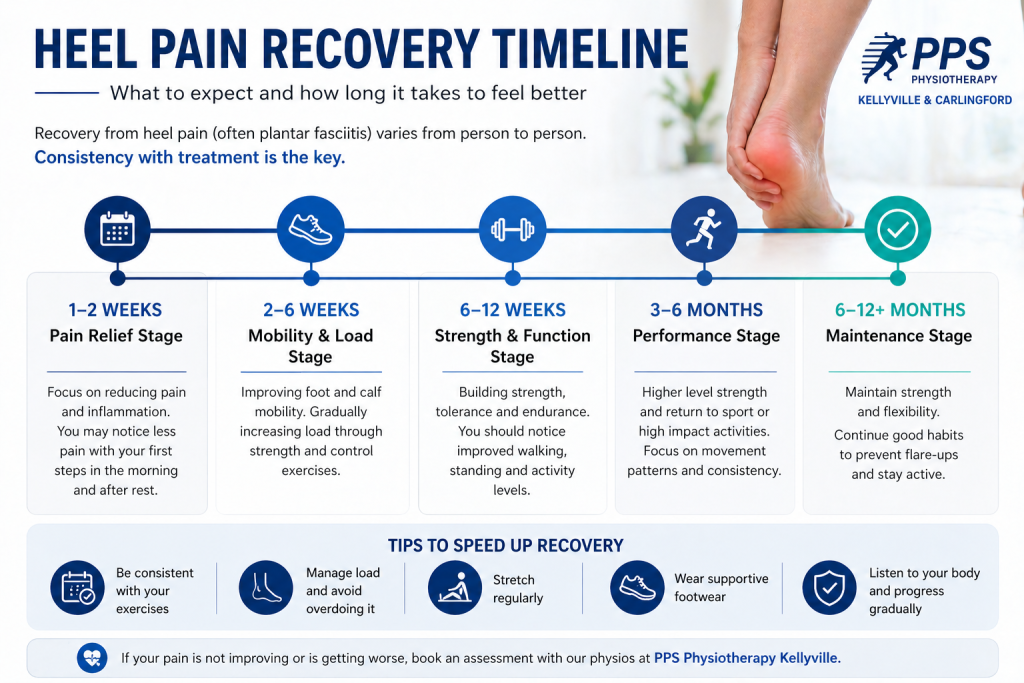
Recovery time depends on several factors, including:
- How long the pain has been present
- Your walking, running, or standing load
- Your footwear
- Calf and foot strength
- Consistency with exercises
- Whether the diagnosis is actually plantar fasciitis or another condition
The earlier heel pain is managed properly, the easier it is to prevent it from becoming a long-term problem.
Heel Pain Treatment in Kellyville
At PPS Physiotherapy Kellyville, we treat heel pain using evidence-based assessment, hands-on care, exercise rehabilitation, and practical load management strategies. Our goal is to reduce your pain, restore confidence, and help you return to normal walking, work, exercise, and sport.
Your treatment may include:
- Assessment of foot, ankle, calf, and walking mechanics
- Manual therapy where appropriate
- Calf and foot strengthening
- Plantar fascia loading exercises
- Footwear advice
- Running or walking load modification
- Return-to-sport or return-to-work planning
If you are dealing with heel pain when walking, the sooner you start the right treatment, the faster you can usually get back to moving comfortably.
Our Kellyville clinic is conveniently located for patients from Kellyville, Rouse Hill, Baulkham Hills, Castle Hill, Glenhaven and surrounding North-West Sydney suburbs.
Ready to get your heel pain properly assessed?
At PPS Physiotherapy Kellyville, we see heel pain and plantar fasciitis regularly and can help you understand what is causing your symptoms.
Book your appointment today and get back to pain-free walking
Frequently Asked Questions
What causes heel pain when walking?
Heel pain when walking is commonly caused by plantar fasciitis, which is an overload irritation of the tissue under the foot. Other possible causes include fat pad irritation, Achilles tendinopathy, nerve irritation, or pain related to sudden changes in activity or footwear.
How do I know if I have plantar fasciitis?
Plantar fasciitis often causes sharp pain under the heel, especially with the first few steps in the morning or after sitting. A physiotherapist can assess your symptoms, foot mechanics, calf strength, and activity history to confirm the most likely diagnosis.
Should I keep walking with heel pain?
You can usually keep walking if symptoms are mild and do not worsen significantly during or after activity. However, if walking increases your pain, causes limping, or makes symptoms worse the next day, your load may need to be modified.
What is the best treatment for plantar fasciitis?
The best treatment usually includes load management, supportive footwear, calf and foot strengthening, plantar fascia-specific exercises, and gradual return to normal activity. Treatment should be tailored to the individual rather than relying on rest alone.
When should I see a physio for heel pain?
You should see a physiotherapist if heel pain lasts more than 1–2 weeks, affects walking, causes limping, or keeps returning. Early treatment can help reduce symptoms and prevent the condition from becoming persistent.
