
Knee Pain on Stairs? Causes, Fixes & Physio Treatment in Carlingford
Knee pain on stairs is commonly caused by irritation around the kneecap joint, often called patellofemoral pain. The good news is that most cases respond well to physiotherapy. In addition, and importantly, when strength, movement control and load management are addressed early, recovery is typically very good.
Last Updated: May 2026
Author: Grant Burton, Physiotherapist
Grant Burton is the Director of PPS Physiotherapy and has over 15 years of experience helping patients recover from knee pain, sports injuries and persistent musculoskeletal conditions. At PPS Physiotherapy Carlingford, our team regularly assesses stair-related knee pain, running-related knee pain and gym-related knee irritation.
Key Takeaways
- Knee pain on stairs is usually caused by kneecap joint overload.
- Symptoms often feel worse going downstairs than upstairs.
- In addition, weakness in the quadriceps and glutes can contribute.
- With targeted physiotherapy and graded exercise, many people improve well.
- However, ignoring symptoms can lead to ongoing irritation.
What Causes Knee Pain on Stairs?
Knee pain on stairs is most commonly caused by increased load through the kneecap joint. Importantly, stairs demand more control from the quadriceps, hips and glutes compared to flat walking.
As a result, when the knee struggles to tolerate load, irritation can develop around the kneecap. Clinically, this presentation is commonly referred to as patellofemoral pain.
Common causes include:
- Patellofemoral pain syndrome
- Quadriceps weakness
- Glute weakness or poor hip control
- Patellar tendon irritation
- Early knee osteoarthritis
- Sudden increases in training load
In our Carlingford clinic, this is one of the more common knee complaints we manage.
What Does Knee Pain on Stairs Feel Like?
Many people describe knee pain on stairs as an ache around the front of the knee or behind the kneecap. Typically, symptoms worsen when walking downstairs, squatting or standing from sitting. In addition, prolonged sitting can increase stiffness.
Typical symptoms:
- Pain going downstairs
- Pain walking upstairs
- Aching around the kneecap
- Clicking or grinding sensations
- Stiffness after inactivity
- Discomfort with squats or lunges
However, if the pain feels sharp, catching or is associated with swelling, you should seek further assessment.
Is It Patellofemoral Pain or Something Else?
Not all stair-related knee pain comes from the same structure. Therefore, a physiotherapy assessment helps identify the exact source of symptoms and guide treatment.
| Condition | Key Symptoms | Common Clues |
|---|---|---|
| Patellofemoral Pain | Front knee ache | Worse with stairs |
| Patellar Tendinopathy | Pain below kneecap | Worse with jumping |
| Meniscus Injury | Sharp catching pain | Twisting or locking |
| Osteoarthritis | Stiffness and swelling | Age-related |
Because each condition requires a slightly different approach, an accurate diagnosis is important.
How Do You Fix Knee Pain on Stairs?
The most effective approach is to reduce irritation, improve strength and gradually reload the knee. However, stopping all activity is rarely necessary. Instead, the goal is to apply the right amount of load at the right time.
First Phase: Settle Pain
- Reduce aggravating activities
- Modify stair use if needed
- Monitor symptoms
Second Phase: Restore Strength
- Quadriceps strengthening
- Glute strengthening
- Controlled loading exercises
Third Phase: Rebuild Function
- Step-based exercises
- Single-leg control work
- Return to activity
Here’s what we typically see when this is treated properly:
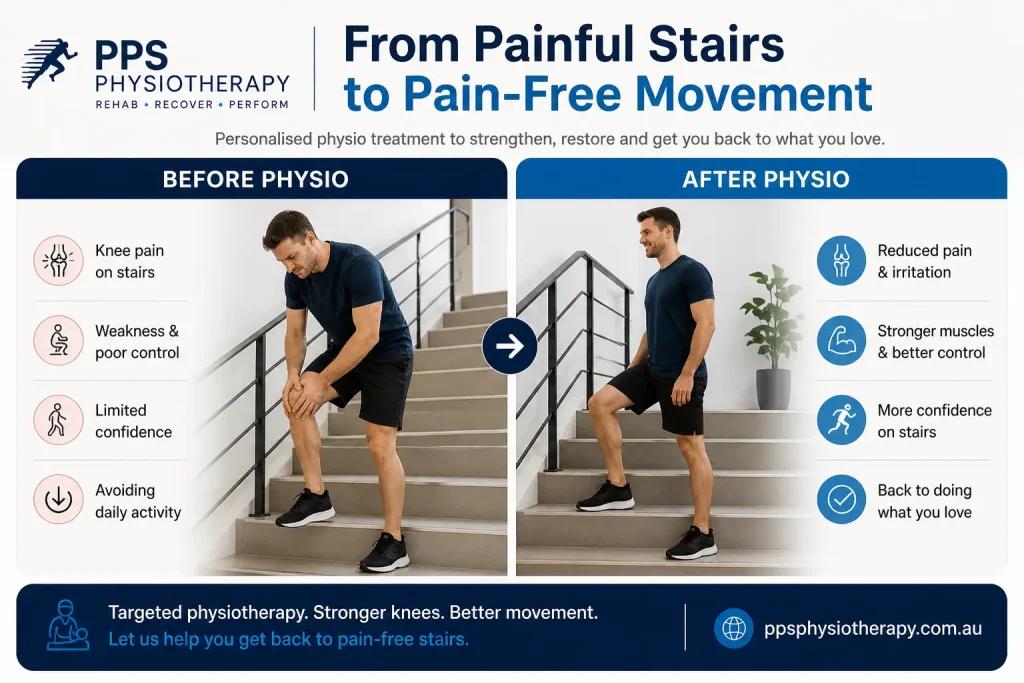
With the right program, physiotherapy helps reduce pain and restore confidence with movement.
Struggling with knee pain on stairs?
Our Carlingford physiotherapy team can assess your knee and build a personalised plan.
When Is Knee Pain on Stairs Serious?
In most cases, symptoms are not serious; however, in some situations, certain signs require attention. For example, swelling, locking or instability may indicate a more significant issue.
- Locking or catching
- Swelling
- Instability
- Pain after injury
If you have any of these symptoms, getting assessed early is the safest option.
Recovery Timeline
Most people improve within 4–8 weeks with the right treatment plan. However, recovery varies depending on strength, load tolerance and consistency.
- Mild: 2–4 weeks
- Moderate: 4–8 weeks
- Persistent: 8–12+ weeks
Overall, consistency plays one of the biggest roles in recovery.
Frequently Asked Questions
Why does my knee hurt more going downstairs?
Going downstairs increases load through the kneecap joint. As a result, and in many cases, symptoms feel worse when descending stairs.
Can it go away on its own?
In some cases, mild symptoms may settle on their own; however, in most cases, persistent symptoms improve faster with treatment.
Should I stop exercising?
In most cases, you should not stop exercising completely; instead, modify activities and gradually increase load.
Is it arthritis?
Not always. In many cases, symptoms are related to load rather than joint degeneration.
